Outdoor residential experience now a legal entitlement for pupils in Scottish schools
10.04.26It is, potentially, “a huge moment for Scotland’s young people...the bill will unlock life-changing opportunities for so many children."
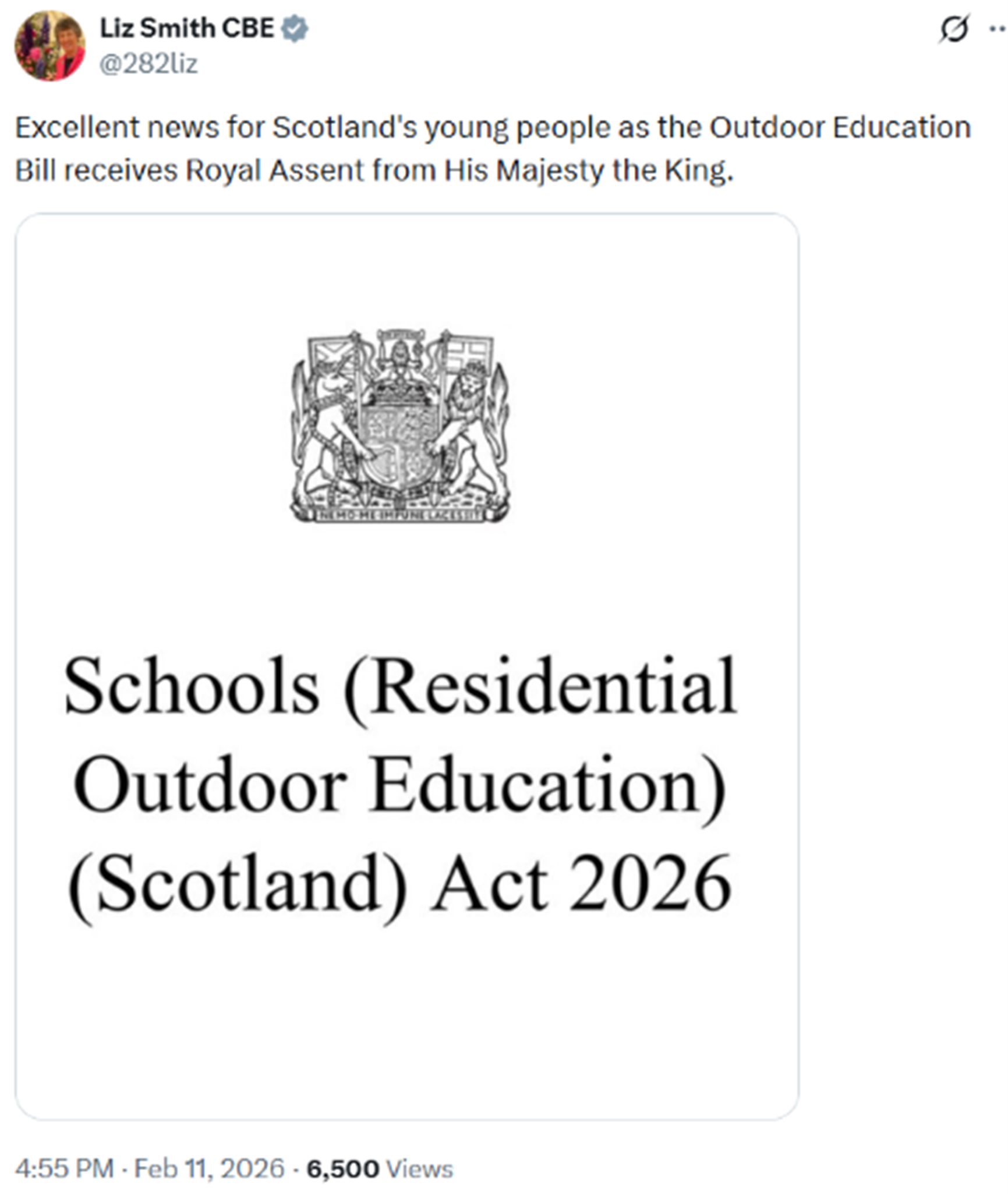
The Schools (Residential Outdoor Education) (Scotland) Bill was passed after its final Stage 3 debate in December 2025 and became an Act of the Scottish Parliament on 11 February 2026. It means that all pupils in state and grant-aided schools in Scotland will have the chance to experience at least four nights and five days of residential outdoor education during their school career.
Education authorities across Scotland must “so far as reasonably practicable, provide or secure the provision of one course of residential outdoor education…that has outdoor learning as its main focus…in facilities such as outdoor centres, youth hostels, camps or sailing boats, and is suitable to the relevant pupil’s age, ability, aptitude and any additional support needs”. That’s now established in law as an addition to the Education (Scotland) Act 1980.
Liz Smith MSP lodged a draft proposal for the Member’s Bill in April 2022 after years of advocacy for outdoor centres, recognising the importance of their contribution to Scotland’s education landscape. She noted in her Bill introduction that, whilst providing “one of the most valuable and rewarding learning experiences that a school pupil can have…where a pupil can be in an environment very far removed from their usual everyday situations [and which] can be life-changing”, provision and access across the country has been declining and unequal.
It also reflected that the immediate and ongoing impact of the Covid-19 pandemic brought severe budget constraints for centres into sharp focus, as well as creating significant gaps in pupil development that these experiences could help to address.
Setting out the next steps for provision
Scottish Ministers must prepare and publish guidance to education authorities and schools managers about their duties under section 6A of the Act. This includes the nature, content and standards to which residential outdoor education should be provided, and should address concerns about implementation costs and funding sources. In particular, it will capture a focus throughout the Bill’s progress on equitable participation and how pupils with additional support needs will be included. Scottish Government’s Curriculum Unit, Education Scotland and experienced representatives from outdoor centres and outdoor learning are developing this work at pace, along with Liz Smith in a post-MSP role.
A number of important reference points from the past couple of decades complement the Bill’s numerous support and research documents. Curriculum for Excellence through Outdoor Learning set out a vision in 2010 that still has relevance even though its implementation has been patchy. The Learning for Sustainability Action Plan 2023-30 is a key policy context with scope to restate the role of outdoor learning – and now residentials - as an entitlement for all learners aged 3-18. It’s also a requirement for all teachers to integrate Learning for Sustainability/outdoor learning in their professional practice as “more Outdoor Learning essential for young people in Scotland”, says a 2023 University of Stirling/NatureScot study).
The 5-year UK-wide Learning Away campaign offers robust evidence on the breadth of impact that residentials can have, as well as helpful guidance and resources. The High Quality Outdoor Learning guide (£) from Institute for Outdoor Learning, originated in 2005 with revisions in 2015 and 2025, sets out what good practice looks like in relation to current contexts and agendas. In terms of direction of travel, timing is ideal to integrate and influence Scotland’s Curriculum Improvement Cycle process, a ten‑year programme focused on reviewing and evolving the curriculum.
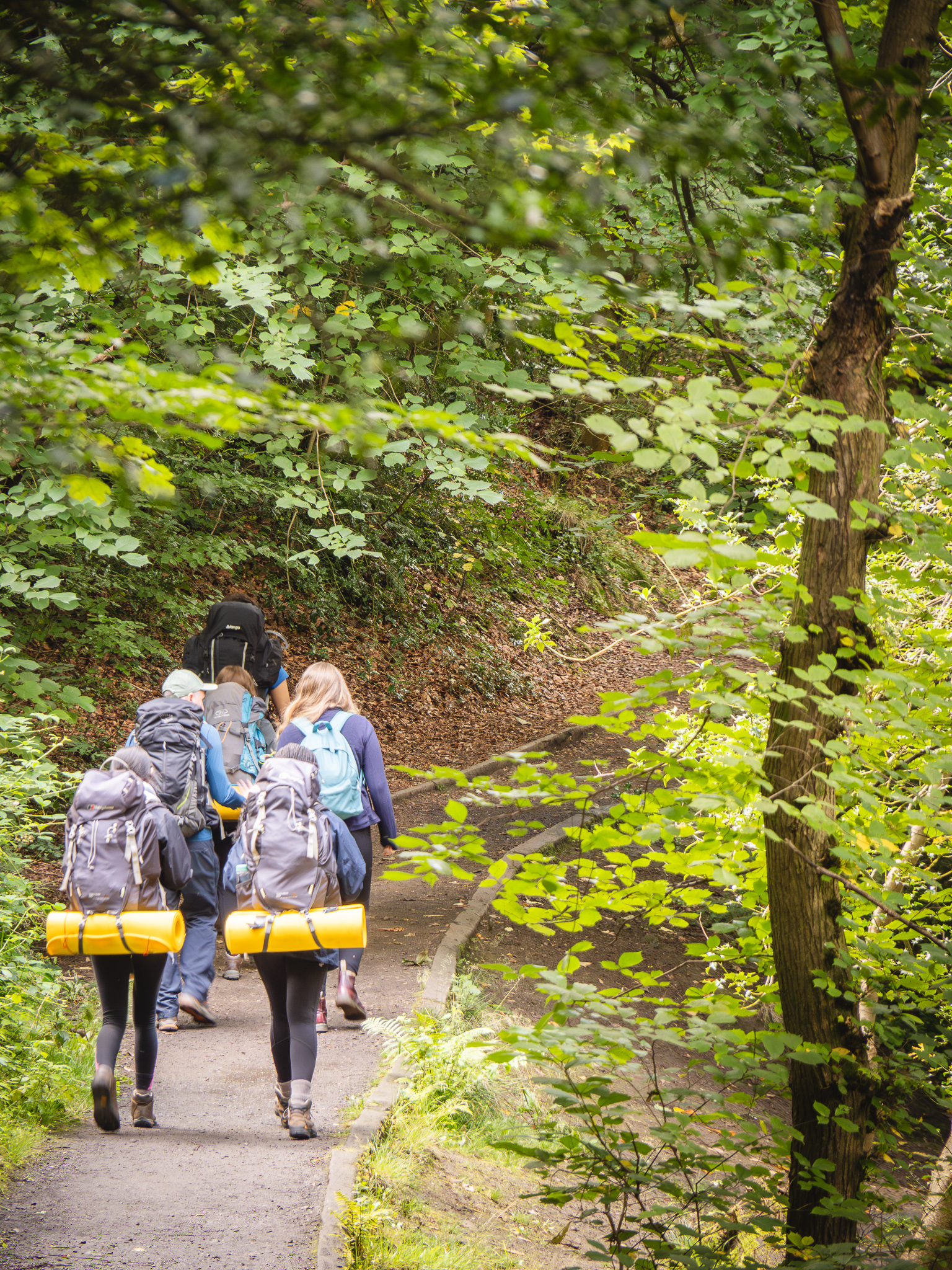
Just as residential outdoor centres are more than bricks and beds, there’s far more to what they provide than abseiling, canoeing and ziplines. Curriculum delivery and support has been an increasing feature of the residential experience and outdoor learning approaches, as captured in a HMIE/Scottish Government “Successful approaches to learning outdoors” 2022 report. Outdoor residentials can embrace all 4 key contexts for learning: school ethos, curriculum areas and subjects, interdisciplinary learning, personal achievement.
Restating benefits, outcomes and the role of outdoor education residentials as part of a progressive mix of outdoor experiences gives an opportunity to integrate, standardise and better highlight a number of themes. Exposure to healthy lifestyle patterns, for example – including sleep, diet, being active, managed phone/social media use, nature connection – can be transformative for some pupils. Time with peers and role models (teachers, educators, outdoor instructors) in settings out with school often fosters deeper relationships; powerful shared experiences that embrace responsibility and consequence promote resilience to knockbacks and challenge.
“Outdoor residential education plays a vital role in meeting Scotland’s wider educational goals” commented Martin Whitfield MSP in the Holyrood debate. “Outdoor Learning is not an optional extra but an essential part of a well-rounded education”. There’s an exciting, historic opportunity here to recognise the full breadth of achievements, knowledge and skills a pupil might experience. It can fast-track (part of) the Awards Network vision that “non-formal-learning has parity of esteem with formal learning qualifications”. And to make bridges between residentials, school and career paths, My World of Work is a dynamic new approach to learner profiling (My Profile) led by Skills Development Scotland where learners can capture the full breadth of their achievements in one place.
George McEwan, Mountain Training Scotland Executive Officer, commented:
“Helping people of all ages and backgrounds to enjoy the outdoors safely, responsibly and with confidence has been the core work of Mountain Training Scotland since 1964. This Bill is a significant achievement that brings exciting new opportunities for collaboration and support. Mountain Training's nationally recognised training pathways offer anyone - from beginners to seasoned leaders – the skills they need to enjoy Scotland’s hills and mountains. Established and respected qualifications such as Mountain Leader and Winter Mountain Leader are key to high standards of safety and leadership in centres, from instructors and teachers alike. Vocational skills training schemes built around activities can help make residential outdoor experiences more inclusive and outcome-focused for learners, building valuable life skills and encouraging a positive, lifelong and responsible connection with the outdoors. We look forward to helping make this happen!”
Whilst it shouldn’t be seen as compulsory, the voluntary nature of participation by pupils in residential outdoor education is now on a statutory footing. It’s an entitlement for all, not a privilege or a postcode lottery. There are envious looks from south of the border, captured in a Westminster Early Day Motion from Tim Farron MP, a staunch campaigner for similar provision: “That this house…congratulates Liz Smith MSP for introducing this transformational legislation and notes overwhelming cross-party support; recognises the proven benefits of outdoor residential education for young people’s mental health, confidence, resilience and educational attainment; celebrates Scotland’s leadership in embedding outdoor education as a core part of the educational experience; regrets that no comparable commitment has been made for schools in England; and urges the UK Government to follow Scotland’s lead to ensure that every child has access to these life-enhancing opportunities”.
It is, potentially, “a huge moment for Scotland’s young people…the bill will unlock life-changing opportunities for so many children. It will be a proud moment for our Parliament” (Ross Greer MSP). The challenge now is to make sure that guidance meets the rigorous terms set out and prove that as Professor David Hopkins, Professor Emeritus at the Institute of Education said, “residentials are, almost without exception, the gift that keeps on giving.”
Rob Bushby, April 2026
Photos: Anna Pultar